Home/Products/PerimWave MW-450M
PerimWave MW-450M · Portable Rapid-Deployment Microwave Guard System

Deploy a Cable-Free Perimeter Wherever the Job Moves.

Unpack the transport case, set the tripods, and arm a volumetric microwave corridor in minutes—with zero trenching or site wiring. PerimWave MW-450M pairs 0.9 kg transceiver heads and 30 h low-temperature lithium packs with ≥2,000 m wireless alarm reception.
Share your temporary zone dimensions and deployment window for a kit configuration plan and supply quote.
5–200 m Volumetric Field (24.075–24.175 GHz)010203040506
01Protective transport case
020.9 kg Tx / Rx unit + 12 V lithium pack
03Aluminum-magnesium tripod
045–200 m volumetric field
05≥2,000 m open-area wireless link
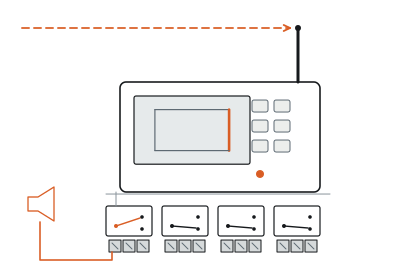
06Wireless control terminal
Cable-Free Link Span
5–200 m
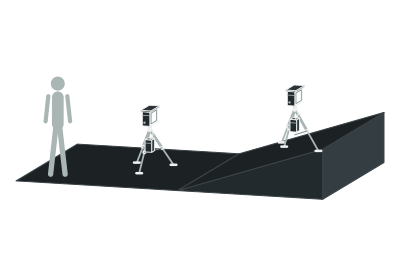
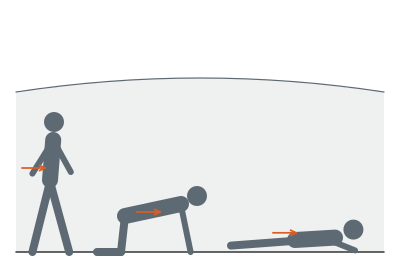
Covers walking targets per pair (150 m crawl, 100 m prone)
Long-Range Radio Alert
≥2,000 m
Open-area wireless alarm reception at the control terminal
Cold-Weather Autonomy
30 h
Standby runtime on 12 V low-temperature lithium packs
One-Person Carry Heads
0.9 kg
Weight per Tx or Rx unit on aluminum-magnesium tripods
01 — Key capabilities

Twelve Reasons Mobile Teams Pack MW-450M

01

Seal Temporary Perimeters Fast

01

5–200 m Walking Coverage

Span wide maintenance gaps or open approaches with one tripod pair.

02

150 m Crawl, 100 m Prone

Catch crouched and low-crawling intruders trying to slip beneath sightlines.

03

Multi-Pair Closed Loops

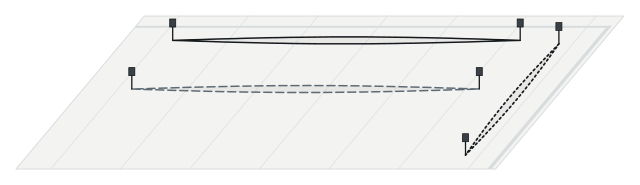
Link 4 pairs around a 200 × 200 m compound for 360° boundary watch.

04

10 Selectable RF Channels

Assign distinct channels across 24.075–24.175 GHz to prevent multi-link crosstalk.

02

Pack Power and Mounting in One Case

05

0.9 kg Sensing Heads

Carry, aim, and relocate 0.9 kg Tx and Rx heads with one operator.

06

12 V Low-Temp Lithium Packs

Run field links without generators, trenching, or temporary AC drops.

07

30 h Continuous Standby

Cover multi-shift maintenance windows on a single battery charge cycle.

08

-40°C to +70°C Rugged Build

Survive harsh weather with high-impact ABS housings and conformal-coated PCBs.

03

Put Alarms Where Guards Sit

09

≥2,000 m Wireless Backhaul

Deliver instant breach alerts across open terrain to distant command posts.

10

Dedicated Control Terminal

View zone status, manage arming, and log events from one portable console.

11

4 Form C Terminal Relays

Trigger local sirens, strobes, or VMS inputs via 1.0 A, 30 VDC contacts.

12

Dual Terminal Power + PC View

Power the console via 12/24 V batteries, 5–24 VDC, plus internet PC software.

02 — Operating principle

From Transport Case to Live Wireless Perimeter in Three Steps

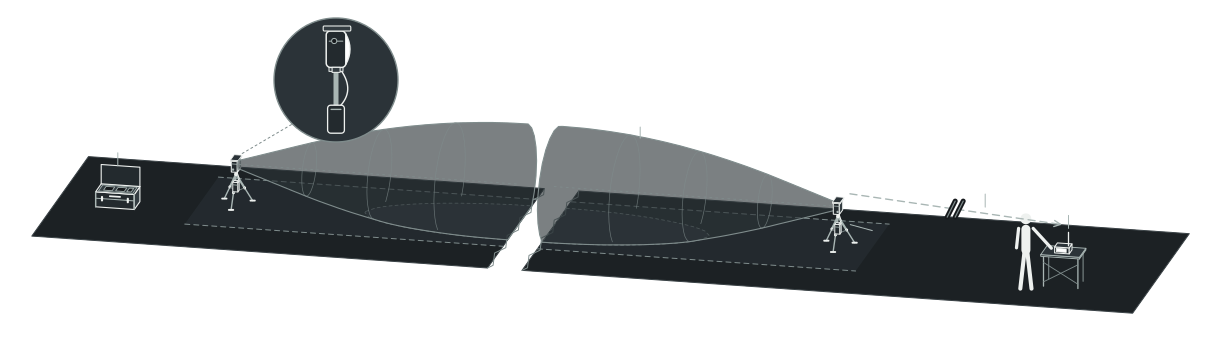
Positioned on aluminum-magnesium tripods at opposite ends of a clear corridor, the MW-450M transmitter emits a 24.075–24.175 GHz (24 dBm) microwave beam toward the receiver to form a spindle-shaped volumetric detection zone.
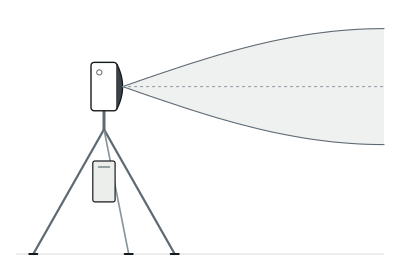
Tripod + Battery Setup
01
Tripod + battery setup
4% clear width (4 m @ 100 m · 8 m @ 200 m)
Volumetric Beam Disturbance
02
Volumetric beam disturbance
200 m walk · 150 m crawl · 100 m prone
Wireless Command Output
03
Wireless command output
≥2,000 m radio → terminal + 4 Form C relays

Total clear-zone width equals 4% of link separation—4 m at 100 m, or 8 m at 200 m.

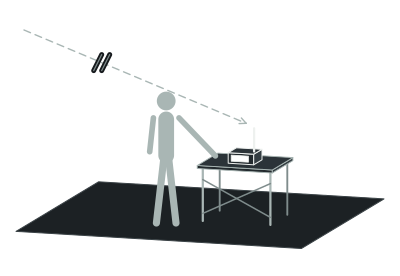
When an intruder walks, crawls, or moves prone across that volume, the received microwave phase and amplitude shift, triggering a wireless alarm packet over ≥2,000 m (open area) to the receiving terminal and its 4 Form C relay outputs.

03 — Zero-infrastructure readiness

No Power, Poles, or Fiber on Site? Pack Tripods, Batteries, and ≥2,000 m Alerts.

Emergency cordons, fence repair gaps, and remote laydown yards cannot wait weeks to trench AC power and signal conduit—yet a bare battery sensor is useless without rigid mounting and long-range alarm backhaul.

01
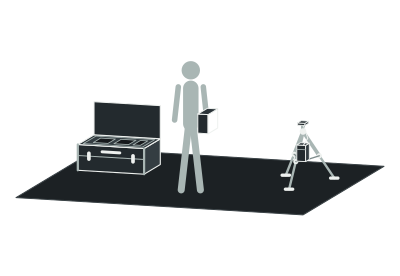
Zero trenching · Zero field cabling
Tx / Rx Sensing Units
02
Tx / Rx sensing units
0.9 kg each
12 V Lithium Packs
03
12 V lithium packs
30 h standby
Multi-Function Alloy Tripods
04
Multi-function alloy tripods
Wireless Terminal
05
Wireless terminal
≥2,000 m · 4 relays

MW-450M delivers the entire perimeter chain inside one protective transport case: 0.9 kg sensing units, rugged aluminum-magnesium tripods, 12 V low-temperature lithium batteries rated for 30 h standby, and a wireless control terminal receiving alarms from ≥2,000 m away.

04 — Field deployment

Engineered for the boundary you operate.

Scenario 01 · Maintenance Breach Windows

Close Overnight Security Gaps When Permanent Fence Panels Come Down

Tearing down a damaged fence section or widening a plant gate leaves high-value facilities exposed to overnight walk-ins—forcing managers to pay round-the-clock standing guards. Set one MW-450M tripod pair across a clear interior bypass line to cover 5–200 m while civil crews work. Once permanent fencing is restored, pack the kit in minutes for the next outage.

Plan this perimeter →
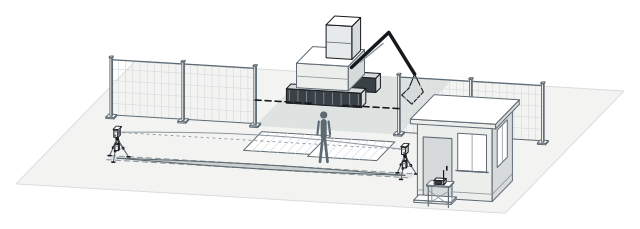
Temporary interior bypass cordon
Open Fence Repair Gap
Open fence repair gap
Clear interior detection corridor
5–200 m
MW-450M tripod pair
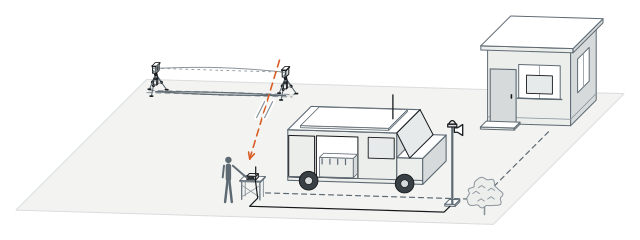
Guardhouse wireless terminal
04 — Field deployment

Engineered for the boundary you operate.

Scenario 02 · Remote Laydown Compounds

Surround Unpowered Equipment Yards with 4 Pairs Across a 200 × 200 m Perimeter

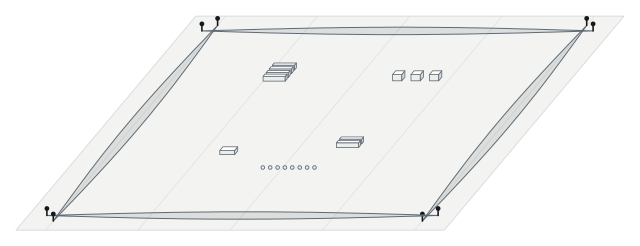
Copper reels, transformers, and heavy machinery staged at greenfield solar or rail construction sites attract organized night theft long before substation power arrives. Deploy 4 MW-450M pairs end-to-end on battery power to enclose an illustrative 200 × 200 m boundary. As construction advances across the site, pick up the tripods and reshape the perimeter in a single shift.

Plan this perimeter →
Illustrative 4-pair MW-450M closed perimeter
4-Pair Closed Boundary
4-pair closed boundary
~200 × 200 m
Overlapping corner tripods
4% clear perimeter strip
Staged assets inside
04 — Field deployment

Engineered for the boundary you operate.

Scenario 03 · Multi-Link RF Coordination

Run Adjacent Links Without Mutual Crosstalk Using 10 Field-Selectable Channels

Deploying multiple portable microwave pairs around a tight compound causes mutual beam interference and phantom alarms on single-frequency units. MW-450M operates in the 24.075–24.175 GHz band (24 dBm) with 10 field-selectable RF channels. Crews assign staggered channels at neighboring corners and parallel lanes so every receiver locks strictly onto its paired transmitter.

Plan this perimeter →
Channel staggering across adjacent perimeter segments
Zone 01010203
01
Zone 01
Channel CH-01
02
Zone 02
Channel CH-04
03
Zone 03
Channel CH-07
24.075–24.175 GHz
24 dBm
04 — Field deployment

Engineered for the boundary you operate.

Scenario 04 · Extreme Climate and Discreet Duty

Keep Batteries Alive at -40°C and Blend Tripod Units into Sensitive Terrain

Consumer battery packs die rapidly in sub-zero night frost, while bright industrial housings give away temporary guard lines across exposed terrain. MW-450M combines low-temperature 12 V lithium packs, conformal-coated PCBs, and high-impact ABS enclosures rated from -40°C to +70°C (0–95% RH). Optional camouflage coverings help field units blend into woodland, desert, or gravel surroundings.

Plan this perimeter →
Ruggedized outdoor construction
High-Impact ABS Housing
High-impact ABS housing
Conformal-coated PCB
0–95% RH
-40°C to +70°C operating range
Optional camouflage cover
04 — Field deployment

Engineered for the boundary you operate.

Scenario 05 · Command Post and Alarm Integration

Receive Alerts ≥2,000 m Away and Trigger 4 Relays or Remote PC Monitoring

Temporary guard teams often sit kilometers back at a main gatehouse or mobile command van—far beyond local buzzer earshot. MW-450M’s wireless control terminal receives field alarms from ≥2,000 m in open areas, running 30 h on 12 V or 24 V lithium packs or continuously on 5–24 VDC. Built-in 4 Form C relays (1.0 A, 30 VDC) and internet-connected PC software link temporary zones into site operations.

Plan this perimeter →
Command-side alarm options
Field Microwave Pairs
Field microwave pairs
≥2,000 m open-area radio
Control terminal
5–24 VDC or 12/24 V battery · 30 h
4 Form C relays (1.0 A, 30 VDC) + internet PC client
05 — System architecture and kit contents

Everything Required to Deploy, Power, and Receive Alarms—In One Coordinated Kit

Unlike fixed sensors requiring civil contractors and low-voltage conduits, MW-450M ships as a self-contained field system where mechanical supports, battery packs, and wireless alarm reception are matched out of the box.
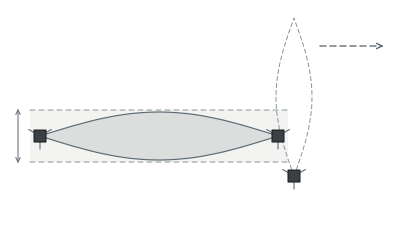
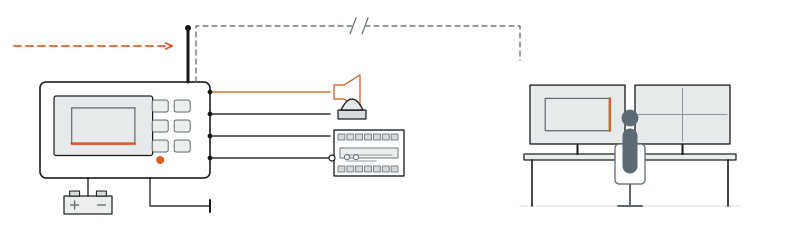
FIELD ASSEMBLY12 V lithium · 30 h standbyOpposite ends of 5–200 m clear corridor
Pairs 01–04 · Closed Temporary Boundary
01
Pairs 01–04 · Closed temporary boundary
12 V battery · 30 h
02
5–200 m per link
4% clear-zone width
PROCESSING / CONTROL5–24 VDC / 12/24 V batteryGuard post, command vehicle, or gatehouse
≥2,000 m Open-Area Wireless Alarm Link
03
≥2,000 m open-area wireless alarm link
04
Control terminal
5–24 VDC or 12/24 V battery
05
4 Form C relays → siren / strobe / NVR
06
Internet-connected PC client

System components and trade interfaces

Subsystem Layer
Components Included
Power Status
Location and Deployment Role
01 · Portable Microwave Heads
Paired microwave transmitter and receiver units (0.9 kg each; 24.075–24.175 GHz, 10 channels, high-impact ABS, conformal-coated PCB)
Powered (12 V lithium pack; 30 h standby)
Opposite ends of 5–200 m clear corridor · Field crew setup
02 · Tripods and Transport Case
Multi-function aluminum-magnesium alloy tripods, protective transport case, and optional environmental camouflage covers
0 W (Unpowered mechanical kit)
Field boundary points and vehicle transport · Rapid repositioning
03 · Wireless Control Terminal
Portable alarm display, arm/disarm control, and signal output unit (≥2,000 m open-area radio range; 4 Form C relays rated 1.0 A at 30 VDC)
Powered (12 V / 24 V lithium pack for 30 h standby, or 5–24 VDC external input)
Guard post, command vehicle, or gatehouse · Security operator
04 · Local Warning and PC Client
External siren/strobe or VMS dry-contact linkage via terminal relays, plus optional internet-connected PC monitoring client
Powered (Site or vehicle power)
Local command point or remote monitoring center · Operations team
06 — Technical specifications

PerimWave MW-450M Full Engineering Specifications

Detection Coverage
Parameter
Standard Specification
Walking-Target Range
5–200 m per transmitter-receiver pair
Crawling-Target Range
5–150 m per transmitter-receiver pair
Prone-Movement Range
5–100 m per transmitter-receiver pair
Multi-Link Perimeter Layout
Successive pairs form closed boundaries (illustrative 4-pair layout: ~200 × 200 m perimeter)
Required Clear-Zone Width
Total clear width equal to 4% of Tx/Rx separation (4 m at 100 m; 8 m at 200 m), free of vegetation and obstacles
Microwave RF Parameters
Parameter
Standard Specification
Operating Frequency Band
24.075–24.175 GHz
Field-Selectable Channels
10 independent RF channels
Transmitted RF Power
24 dBm
Portable Hardware and Power
Parameter
Standard Specification
Standard Kit Contents
Microwave Tx/Rx units, aluminum-magnesium tripods, low-temperature lithium packs, wireless control terminal, protective transport case
Sensing Unit Weight
0.9 kg per transmitter unit; 0.9 kg per receiver unit
Detector Battery and Standby
12 V low-temperature lithium battery pack; 30 h standby runtime
Camouflage Option
Optional environmental camouflage cover for terrain blending
Wireless Terminal and Outputs
Parameter
Standard Specification
Wireless Alarm Reception Range
≥2,000 m in open areas
Terminal Power and Standby
5–24 VDC external input, or 12 V / 24 V lithium battery pack (30 h standby)
Relay Outputs
4 Form C relays rated 1.0 A at 30 VDC
Monitoring Interfaces
Wireless receiving/control terminal with display, plus internet-connected PC client
Environmental and Durability
Housing and PCB Protection
High-impact ABS enclosure; conformal-coated PCB
Operating Temperature and Humidity
-40°C to +70°C; 0–95% RH (non-condensing)

Above values reflect standard product technical specifications. Actual battery runtime, clear-zone grading, and wireless reception distance depend on ambient temperature, link terrain, and line-of-sight conditions.

07 — Engineering FAQ

Common Questions Before Specifying MW-450M

01When should we choose portable MW-450M kits versus fixed MW-400 microwave sensors?

Choose PerimWave MW-450M for temporary maintenance gaps, mobile equipment yards, and emergency zones without site cabling—where tripod mounting, 30 h battery standby, and ≥2,000 m wireless alerts save weeks of civil work. Choose fixed PerimWave MW-400 for permanent gates, rooftops, and double-fence corridors wired to 12–48 VDC.

02Do the 200 m, ≥2,000 m, and 0.9 kg specifications refer to the same link or component?

Each number measures a distinct function: 5–200 m is the microwave intrusion detection span per Tx/Rx pair (walking target); ≥2,000 m is the open-area wireless alarm transmission distance back to the control terminal; and 0.9 kg is the weight of each individual transmitter or receiver head (excluding tripods, batteries, and transport case).

03What site preparation is needed along each temporary microwave corridor?

Each Tx/Rx pair requires an unobstructed line-of-sight corridor whose total width equals 4% of the separation distance—for example, 4 m wide on a 100 m span or 8 m wide on a 200 m span—cleared of tall grass, swaying brush, and moving vehicles.

04How do teams sustain protection across multi-week construction or outage projects?

Each 12 V lithium pack provides 30 h of standby operation so crews can swap spare charged battery packs on a daily maintenance round without moving the aligned tripods, while powering the indoor control terminal continuously from 5–24 VDC.

08 — Next step

Get a Preliminary MW-450M Kit Configuration and Equipment Supply Quote

Tell us the dimensions of your temporary compound or maintenance gap and how far away your guard post sits. Our engineers will size the required tripod pairs, spare battery rotation, and wireless terminal setup, and prepare an equipment supply quotation.

01Shape and segment lengths of the temporary boundary or open gap
02Distance and terrain between the perimeter and the guard receiving point
03Expected deployment duration, ambient temperature lows, and spare battery needs
04Local alarm actions required (siren/strobe relays or internet PC monitoring)
Solar and Battery Storage ↗Oil and Gas Terminals ↗Substations ↗Airports ↗Commercial and Logistics ↗How It Works ↗Power Planning Guide ↗Installation and Maintenance ↗Compare All Products ↗